
The atlas of the unseen · भूत · प्रेत · पिशाच
Spirits and unseen afflictions, across the world
Twenty-six beings from six regions of the earth. Different names, different faces, and underneath them the same few human experiences. Here is what each tradition says, and how this lineage answers.
The atlas
What the world has met in the dark
Open any entry to read how its own tradition understands it.
South AsiaBhūtaभूतThe restless dead: one who died suddenly, or with something left undone.
In the traditionAcross India a bhūta is a person who has died and cannot move on, held back by a violent death, by unsettled affairs or by funeral rites left undone. The tradition answers with ātma-śānti, a rite of peace for the soul modelled on the shraddha.
South AsiaPretaप्रेतThe departed for whom the last rites are still incomplete.
In the traditionIn Sanskrit a preta is the spirit of the dead, above all before the last rites are finished. Hindu rites offer rice balls through the year that the passage is said to take, and the Garuda Purana describes this state at length.
South AsiaPiśācaपिशाचA flesh-eating haunter of cremation grounds in the old texts.
In the traditionThe piśāca appears in the Mahabharata and the Puranas as a dark being of the cremation ground. One belief holds that a person denied a proper funeral may become one.
South AsiaVetālaवेतालThe spirit that enters a corpse and speaks through it.
In the traditionBest known from the twenty-five tales told to King Vikramaditya by a vetāla inside a corpse that hangs from a tree in a cremation ground. The collection is preserved in the Kathasaritsagara of the eleventh century.
South AsiaBrahmarākṣasaब्रह्मराक्षसA learned man fallen through arrogance or wrongdoing.
In the traditionThe Manusmriti says a Brahmin who does unrighteous deeds becomes one after death. The Narada Purana tells of a scholar whose pride toward his teacher brought him to this state, living in a banyan tree. In some stories a brahmarākṣasa who is pleased grants boons.
South AsiaChuḍailचुड़ैलA woman lost in childbirth, or cruelly treated, who returns.
In the traditionKnown across South Asia and recognised, the stories say, by feet turned backward. She is a woman who died in pregnancy or childbirth, or after cruel treatment by her family. Behind the story stands a real grief.
South Asia and TibetḌākinīडाकिनीFierce followers of Kali in the Puranas, and goddesses in Tantra.
In the traditionIn the Puranas the ḍākinīs are fierce beings in the train of the goddess Kali. In Hindu Tantra, Ḍākinī is herself a goddess, linked with the chakras of the body. In Tibetan Buddhism the ḍākinī is a fierce feminine embodiment of wisdom.
South AsiaGraha, the seizersग्रहUnseen beings said to take hold of a person.
In the traditionClassical Ayurveda counts Bhūtavidyā among its eight parts: the pacifying of possessing spirits, and the care of people whose minds are affected by such possession.
South AsiaNazarनज़रThe evil eye: harm carried by an envious or admiring look.
In the traditionA black dot on a child’s cheek, a lemon and chillies at the door, salt circled over the head. The belief, and the small rites that answer it, run from India to the Mediterranean.
Arabia and the Islamic worldJinnBeings of smokeless fire, living unseen beside humankind.
In the traditionThe Qur’an speaks of the jinn as made of smokeless fire and as having free will, some of them good and some harmful. That tradition answers possession with exorcism and with amulets bearing the name of God.
Jewish folkloreDybbukThe soul of a dead person that clings to someone living.
In the traditionThe word comes from the Hebrew for clinging. A dybbuk leaves once its purpose is fulfilled, sometimes after an exorcism. The idea appears in writings of the sixteenth century and became famous through S. An-sky’s play of 1920.
Ethiopia, Sudan and EgyptZārSpirits that take up residence in a person and ask to be acknowledged.
In the traditionThe zār ceremony uses music, incense and trance. Its aim is to reconcile the spirit with its host. The spirits are often identified with winds or with jinn.
JapanOnryōThe wronged spirit who returns for justice.
In the traditionThe onryō comes back to avenge a wrong suffered in life. Japan answered such spirits with shrines. Sugawara no Michizane, one of the Three Great Onryō, is worshipped today as the deity Tenjin.
China and East AsiaHungry ghostsThe departed who wander unfed.
In the traditionOn the fifteenth night of the seventh lunar month, families set out food and burn paper offerings for the wandering dead, and lotus lanterns are floated on rivers to guide lost souls. The hungry ghost is the Chinese rendering of the Buddhist preta.
ChinaJiangshiThe risen corpse of Chinese legend.
In the traditionFilms show it hopping, while in the older folklore it runs. The hopping image is traced to the custom of carrying the dead home by night, tied to bamboo poles. A Taoist talisman fixed to the forehead is said to hold it still.
Malaysia and IndonesiaPontianakA woman lost in childbirth who returns by night.
In the traditionCalled kuntilanak in Indonesia. The folklore is said to have inspired the name of the city of Pontianak in Borneo, whose founding legend tells of ghosts driven off with cannon fire.
PhilippinesAswangA shape-changer that hunts by night.
In the traditionSpanish colonists recorded it as the most feared being of the islands. Its powers are strongest after dark. Salt, ash and holy objects are among the traditional protections, and the province of Capiz is called its home.
ThailandPhi PopA spirit that lives inside a person and feeds from within.
In the traditionIn the belief of Isan it possesses a person and consumes them from inside. Someone accused of hosting one may be pressed to leave the village. Only a mor phi, a spirit doctor, is said to be able to subdue it.
Germany and all EuropePoltergeistThe noisy spirit: knocks, thrown objects, moved furniture.
In the traditionThe word is German for a spirit that rumbles. Reports go back to the first century. Investigators have long noted that cases tend to centre on one young person in the house, and many famous ones were later shown to be hoaxes.
IrelandBansheeThe woman of the mounds whose wail foretells a death.
In the traditionThe bean sídhe is a herald. She keens for certain old Irish families when one of their own is about to die, as a mourner who arrives before the news does.
ScandinaviaDraugrThe dead who walk from the burial mound to guard their treasure.
In the traditionThe Icelandic sagas describe draugar of great strength who trouble farms in winter. Heroes lay them to rest by wrestling them down.
RomaniaStrigoiThe troubled dead who rise from the grave.
In the traditionRomanian folklore ties them closely to the vampire. Garlic is the well-known defence, together with care over the rites of burial.
Germanic and Slavic landsThe MareA weight that sits on the chest of the sleeper.
In the traditionThis being gave English the word nightmare, and in Danish and Norwegian a bad dream is still called a mare ride. The experience is described today as sleep paralysis: waking while the body cannot move, often with a sense of presence or of pressure on the chest.
Mexico and Latin AmericaLa LloronaThe weeping woman who searches the riverbank for her children.
In the traditionShe mourns the children she drowned and is met at night near water. Some trace her to Aztec figures such as Cihuacóatl and the spirits of women who died in childbirth.
Jamaica and the CaribbeanDuppyA restless spirit of the dead, abroad at night.
In the traditionThe word came with Ga and Akan speakers from what is now Ghana. Jamaican custom keeps the nine nights after a death, so that the spirit may return to the ancestral land.
Southern AfricaTokolosheA small water spirit sent to trouble a household.
In the traditionIn Zulu belief it is called up by ill-wishers. Beds are raised on bricks to stay out of its reach, and a sangoma, a traditional healer, is asked to banish it.
What people describe
When someone says: something is with me
The words change from country to country. The experiences are few and familiar: a heaviness in one room, a presence at the edge of sleep, a run of dreams about someone who has died, a child who will not stay in the house.
Every tradition in the atlas agrees on one thing. These experiences are to be met calmly and in order.
Look at the ordinary first
- Sleep: broken nights and sleep paralysis account for much of what is felt at the bedside.
- Grief: the recently bereaved very often sense the one they have lost.
- Health: fever, some medicines and exhaustion all change what we perceive.
Having these looked at is the quickest relief of all, and a good teacher will always ask about them.
Then the tradition’s own answer
Where the cause lies beyond these, the Shakta and Bhairava traditions have worked with it for a very long time: remembrance and rites for the departed, purification, the lamp at dusk, and the worship of Bhairava, whom every such being obeys.
How this lineage works
We take up such cases, wherever you live.
- You tell us what is happeningA private 15-minute video session with Acharya Shri Jashanpreet Singh Ji, from anywhere in the world. You describe it in your own words and in full confidence.
- You receive an honest readingThe Acharya looks at the matter by the methods of the lineage and tells you plainly what he finds. Many troubles have an ordinary cause, and when that is so he says so.
- The remedy of the traditionFor affliction by the unseen the lineage turns to Bhairava, lord of all such beings, with purification, the śānti havan and the rites that send a presence on its way in peace.
- Protection for lifeYou are given a rakṣā practice and a kavach of your own. Once given it is yours for life, and it deepens with the years you keep it.
For the departed
Most restless spirits are answered with remembrance
Look again at the Indian entries in the atlas. Nearly all of them describe someone who died and was left without something: a proper farewell, an offering, a finished task. The tradition’s first answer is therefore to give what was missing.
That is the meaning of shraddha and tarpana, the offerings of food and water made in the name of the dead. For the first year the rites offer rice balls through the months the passage is said to take. Each year the sixteen lunar days of Pitru Paksha are kept for all one’s ancestors, and they close on Sarvapitri Amavasya, also called Mahalaya.
The guardian
Why Bhairava
The name comes from a word meaning fearsome. Bhairava is the form of Shiva who stands guard: tradition places a Bhairava at every Shakta pitha, and he is worshipped as Kṣetrapāla, guardian of the ground. He has eight principal forms, the Ashta Bhairava, and his companion is a dog.
The beings in this atlas belong to the edges of things: the cremation ground, the crossroads, the hour between day and night. Those edges are his. That is why this lineage turns to him first.
Whatever it is, you can say it here.
One private video session with Acharya Shri Jashanpreet Singh Ji. He listens, tells you plainly what he finds, and shows you the next step.
Private and confidential. Our work goes alongside the care of your doctor and other professionals.Questions
People also ask
- What is the difference between a bhuta and a preta?A bhuta is the restless spirit of someone who died suddenly or with something left undone. A preta is the hungry departed for whom the last rites were left incomplete. Both are settled, tradition says, by proper rites and offerings.
- Which deity protects against spirits in the Hindu tradition?Bhairava above all, as lord of all unseen beings and guardian of places, together with Maa Kali. Hanuman and Narasimha are also widely called upon.
- What is the feeling of a weight on the chest at night?Many cultures gave it a name, such as the Mare, which is the origin of the word nightmare. It is well described today as sleep paralysis. If it keeps returning, speak to a doctor, and you are welcome to speak to us as well.
- How do I ask for help?Book a private 15-minute video session. You describe what is happening and the Acharya tells you plainly what he finds and what the lineage can do.
Personal guidance · व्यक्तिगत मार्गदर्शन
A legend belongs to everyone. Your situation is your own.
Two ways to receive guidance from the Mahakali Tantra lineage, wherever you live.
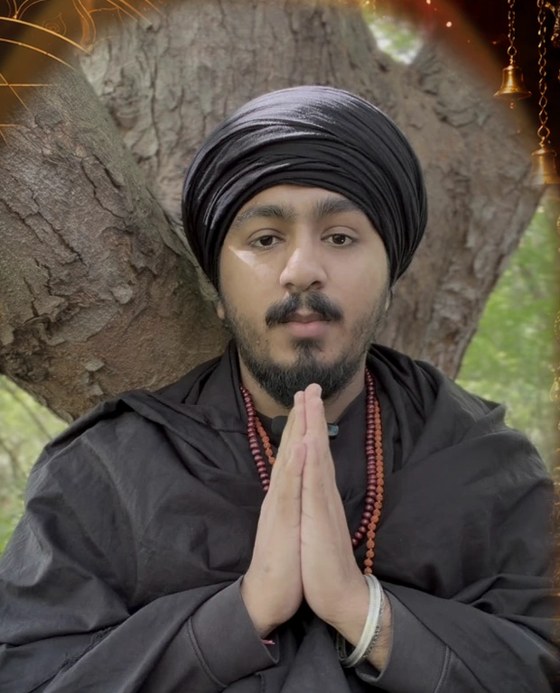 Live · 15 minutes · private video call
Speak with Acharya Shri Jashanpreet Singh Ji
Bring one question about your sadhana or your path. You meet the Acharya face to face on a private video call and leave with one practical next step.
per session
Book a 15-minute video session →
 Written report · 24–28 pages · confidential
The Ultimate Spiritual Analysis
A personal report prepared individually for you by Guru Amitacharya and the Mahakali Tantra Pith: Vedic astrology, aura and chakra reading, face and palm study, and a practical remedy plan, delivered as a private PDF.
See what the report covers →
Guidance is spiritual in nature, given honestly and for your good. Payment is secured by Razorpay in Canadian or US dollars.