
Stotra decoded · जयन्ती मङ्गला काली
Jayanti Mangala Kali: the eleven names, decoded
Argala Stotram, verse 1 · Rishi Vishnu · Metre Anushtubh · Devata Mahalakshmi
ॐ जयन्ती मङ्गला काली भद्रकाली कपालिनी ।
दुर्गा क्षमा शिवा धात्री स्वाहा स्वधा नमोऽस्तु ते ॥durgā kṣamā śivā dhātrī svāhā svadhā namo’stu te ||
In plain EnglishJayanti, Mangala, Kali, Bhadrakali, Kapalini, Durga, Kshama, Shiva, Dhatri, Svaha, Svadha: salutation to you.
Word by word
| जयन्तीjayantī | the Victorious One. |
|---|---|
| मङ्गलाmaṅgalā | the Auspicious One. |
| कालीkālī | Kali. The name carries both senses of kāla: the dark one, and She who is Time. |
| भद्रकालीbhadrakālī | the gracious Kali; Kali who brings good. |
| कपालिनीkapālinī | She who bears the skull. |
| दुर्गाdurgā | the one who is hard to reach; She who carries one across what is hard. |
| क्षमाkṣamā | Forbearance; patience itself. |
| शिवाśivā | the Benevolent One. |
| धात्रीdhātrī | the Sustainer; She who supports. |
| स्वाहाsvāhā | Svaha, the call with which an offering is given to the gods in the fire. |
| स्वधाsvadhā | Svadha, the call with which an offering is given to the ancestors. |
| नमः अस्तु तेnamaḥ astu te | salutation be to you. |
Where the verse comes from
This is the first verse of the Argala Stotram. The Argala is one of the limbs recited before the Devi Mahatmya, alongside the Kavacha and the Kilaka. Its own heading names Vishnu as its seer, Anushtubh as its metre and Mahalakshmi as its deity.
Argalā means the bolt of a door. The hymn is the bolt that is drawn back before the great text is opened.
Eleven names in one breath
The verse is a string of eleven names with a bow at the end. Read in order, the names travel a long way. They begin in victory and auspiciousness, pass through the fierce forms of Kali and Kapalini, arrive at Durga, and then turn gentle: patience, kindness, the one who sustains.
The last two names are the surprise. Svāhā and svadhā are the two words spoken when an offering is made, the first to the gods and the second to the ancestors. The verse says the Goddess is those words. Every offering, whoever it is addressed to, passes through Her.
The refrain that follows
From the third verse onward each verse of the Argala closes with the same line: rūpaṃ dehi jayaṃ dehi yaśo dehi dviṣo jahi. Give form, give victory, give good name, strike down the hostile.
Teachers commonly explain the hostile ones here as the enemies within: anger, greed, envy and delusion. The Argala is recited for one’s own strength and clarity.
How it is used
The Argala is recited before the Saptashati and also by itself, especially through Navratri. Anyone may recite it with devotion.
Questions people ask
- Where is Jayanti Mangala Kali from?It is the first verse of the Argala Stotram, which is recited before the Devi Mahatmya (Durga Saptashati).
- How many names of the Goddess are in the verse?Eleven: Jayanti, Mangala, Kali, Bhadrakali, Kapalini, Durga, Kshama, Shiva, Dhatri, Svaha and Svadha.
- What do Svaha and Svadha mean?They are the words spoken when an offering is made: svaha for offerings to the gods in the fire, svadha for offerings to the ancestors. The verse names the Goddess as both.
Sources for this page
- Argala Stotram, verses 1 to 3 with the viniyoga line, from the Durga Saptashati text as published by Drik Panchang (patha-vidhi section).
The Sanskrit text above is given as it stands in the sources named here. The English rendering and the notes are our own. Found a slip? Please tell us and it will be checked and corrected.
Personal guidance · व्यक्तिगत मार्गदर्शन
A verse is the same for everyone who recites it. Your question is your own.
Two ways to receive guidance from the Mahakali Tantra lineage, wherever you live.
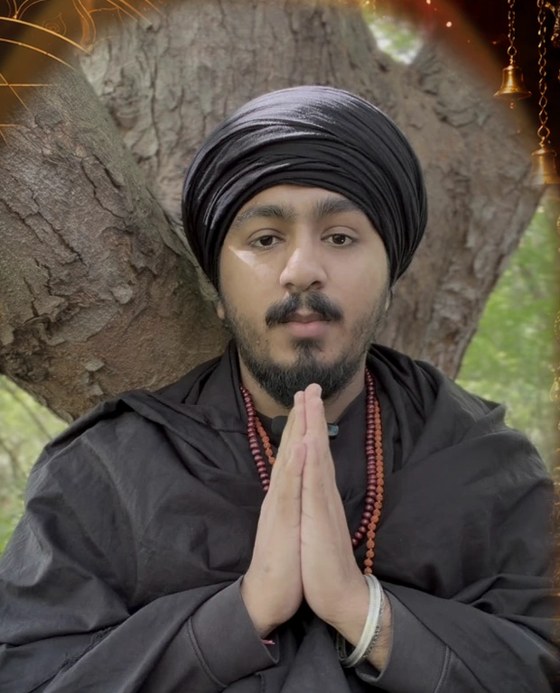 Live · 15 minutes · private video call
Speak with Acharya Shri Jashanpreet Singh Ji
Bring one question about your sadhana or your path. You meet the Acharya face to face on a private video call and leave with one practical next step.
per session
Book a 15-minute video session →
 Written report · 24–28 pages · confidential
The Ultimate Spiritual Analysis
A personal report prepared individually for you by Guru Amitacharya and the Mahakali Tantra Pith: Vedic astrology, aura and chakra reading, face and palm study, and a practical remedy plan, delivered as a private PDF.
See what the report covers →
Guidance is spiritual in nature, given honestly and for your good. Payment is secured by Razorpay in Canadian or US dollars.